
Modern Corporate Headshots — modern corporate headshots for your brand
This article is part of our Team & Company Headshots collection.
Let's be honest, those stiff, blue-background headshots from a decade ago feel completely disconnected from today's world. A modern corporate headshot is so much more than just a picture; it’s a strategic asset that instantly communicates your brand’s professionalism, culture, and personality.
Unlike the dated, overly formal photos of the past, today's headshots are authentic, approachable, and perfectly aligned with your company's visual identity.
Why are modern headshots essential for your brand?

In a world where a LinkedIn profile often serves as the first handshake, your team's photos are a direct reflection of your brand's credibility. They’re one of the first visual cues you send to potential clients, partners, and future employees.
A cohesive headshot strategy is crucial for building trust. When a prospect sees consistent, high-quality, and genuine images across your website, sales decks, and social media, it creates an immediate impression of competence and attention to detail. This isn't just about looking good; it's about building a human connection before a single word is exchanged.
Before we dive deeper, it's helpful to see just how much things have changed. Here’s a quick breakdown of the old way versus the new.
Modern vs Traditional Headshot Approaches
| Element | Traditional Approach | Modern Approach |
|---|---|---|
| Posing | Stiff, formal, facing forward | Natural, relaxed, dynamic angles |
| Background | Solid blue or gray studio backdrop | Environmental, textured, branded colors |
| Lighting | Flat, overly bright, corporate feel | Soft, dimensional, often natural light |
| Wardrobe | Strict business formal (suits/blazers) | "Brand-appropriate" - from smart casual to business formal |
| Expression | Forced or serious smile | Authentic, confident, approachable |
| Overall Vibe | Dated, impersonal, uniform | Modern, personal, reflects company culture |
This shift isn't just about aesthetics; it's about connecting with people on a human level. The modern approach shows your team as they are: real, capable, and ready to connect.
Defining Your Strategic Goals
Before you even think about cameras or backgrounds, you need to ask: what do we want these headshots to accomplish? The answer will shape every decision you make from here on out.
Here are a few common goals I see with clients:
- Attracting Top Talent: Showcasing a vibrant, approachable team can make your company far more appealing to high-quality candidates.
- Empowering Sales Teams: Giving your sales pros polished, confident headshots helps them build credibility and rapport with prospects right out of the gate.
- Presenting a Unified Front: Ensuring your executive team looks cohesive and professional reinforces brand strength and leadership.
Thinking through these goals turns a simple photo refresh into a genuine strategic initiative.
Your team's headshots are a silent ambassador for your brand. They work 24/7 on your website, social profiles, and proposals, constantly shaping perceptions and building trust with your audience.
The Impact of Visual Consistency
Inconsistency is a brand killer. When one employee has a professional studio shot, another has a cropped vacation photo, and a third has a blurry selfie, it screams disorganization. This visual chaos completely undermines the professional image you work so hard to build everywhere else.
Modern corporate headshots solve this by creating a unified visual language. Research consistently shows that seeing authentic faces helps people process first impressions faster, which in turn increases perceived trustworthiness and competence.
This is why you see smart businesses integrating employee headshots across every high-touch customer point—from website team pages and email signatures to press materials. As branding experts at Deksia point out, it's a direct and powerful way to influence engagement.
By investing in a consistent, modern approach, you aren't just updating photos. You're strengthening your brand's foundation, one employee at a time. It’s a deliberate effort that signals you value both your people and how your company presents itself to the world.
How do you create a headshot style guide for your company?
Consistency is the absolute bedrock of a strong brand identity. We've talked about the why behind modern headshots, but this is the how—this is where you build the playbook to get that polished, unified look across your entire organization.
A detailed style guide is, without a doubt, the single best tool for making sure every photo aligns with your company's image. It doesn't matter if it's for a new C-suite executive or a summer intern; the guide ensures the final product feels distinctly yours. It takes vague ideas like "professional" and turns them into concrete, actionable rules for your photographer, your internal team, and even your new hires.
Defining Your Visual Mood
Before you even think about picking out backdrops or color palettes, you need to decide on the feeling you want to convey. Are you an innovative, disruptive tech startup or a trusted, long-standing financial institution? The answer will completely change your visual direction.
- Approachable and Warm: This vibe is usually created with soft, natural light, genuine smiles, and more relaxed, environmental backgrounds. Think of a fintech startup using its bright, airy office to signal transparency and a modern approach.
- Powerful and Authoritative: This style leans on structured, intentional lighting, confident expressions, and clean, bold backgrounds. A top-tier law firm, for example, might go this route to project expertise and gravitas.
Pinning down this mood is your first real step. It becomes the filter for every other decision you'll make, from wardrobe choices to posing instructions.
Backgrounds and Wardrobe Guidelines
Once you've nailed down the mood, it's time to get specific. Vague instructions are the enemy of consistency and the fastest way to get a mishmash of results. What you need are clear, easy-to-follow rules.
For wardrobe, provide a specific color palette. Don't just say "business casual." Instead, specify "solid jewel tones and deep neutrals like navy, charcoal, and forest green." And be just as clear about what to avoid: "no busy patterns, large logos, or neon colors."
For backgrounds, decide if you're going for a studio look with a specific color (like a warm, welcoming gray) or an environmental shot in the office. If it's the latter, mandate that the background must be consistently blurred to keep the focus squarely on the person.
A well-defined style guide removes all the guesswork. It empowers your team and your photographer to create modern corporate headshots that are consistently on-brand, reinforcing your company's identity with every single image.
The demand for brand cohesion isn’t just a passing trend — it reflects a rapidly expanding market. Industry estimates suggest the business headshot photography sector was valued at around USD 2.5 billion in 2023, with projections indicating it could grow to nearly USD 5.8 billion by the early 2030s. This growth is largely driven by companies’ increasing need for consistent, professional visual identities across digital channels, highlighting how seriously organizations now take their visual brand presence.
Ultimately, your style guide ensures every photo tells the same brand story, creating an impressive and unified presence online and off. This is especially vital for platforms where first impressions are made in seconds. To see how these principles apply directly to the most important professional network, check out our guide on creating impactful LinkedIn headshots.
Should you hire a photographer or use AI for corporate headshots?
Not long ago, getting modern corporate headshots meant one thing: booking a local photographer and hoping for the best. That's not the world we live in anymore. Today, you're at a crossroads with a major decision to make: do you hire a professional photographer, or do you tap into a powerful AI headshot generator?
Both paths can lead to incredible results, but they're built for different needs, budgets, and timelines. The right choice comes from an honest look at what matters most to your brand—authenticity, cost, consistency, or speed. Neither is universally "better," but one will be a perfect fit for your specific goals.
This decision tree gives you a visual guide for thinking through the key style elements.
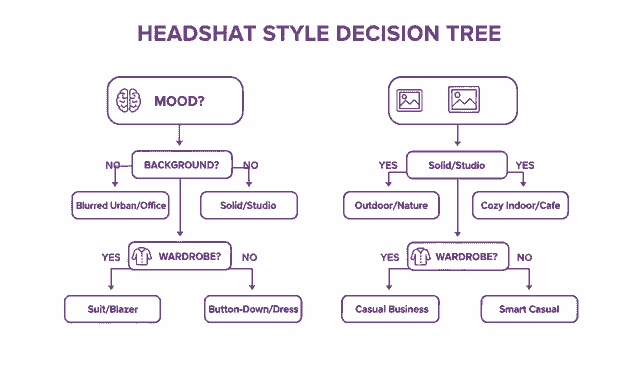
As you can see, the mood you want to set, the background you choose, and the wardrobe you recommend are all connected. And they should all point back to your core brand identity.
The Case for a Professional Photographer
There’s an undeniable magic that happens with a skilled photographer. It’s about human connection. A great photographer is part director, part brand consultant, and part therapist for your camera-shy team members. They know how to read body language, coach a genuine smile out of a nervous executive, and capture the tiny nuances of personality that define your company’s soul.
That human touch is non-negotiable for brands built on a foundation of raw authenticity. If you want rich, environmental portraits that tell a story about your team interacting in your workspace, a photographer is the best investment you can make. They adapt to tricky lighting on the fly, direct poses that feel natural, and turn the whole thing into a collaborative, team-building experience.
If you go this route, here’s what to look for:
- A Killer Portfolio: Don't just look for pretty pictures; look for consistency. Do their images have the exact vibe and quality you're after?
- Real Corporate Experience: Have they actually worked with companies like yours? Someone who shoots weddings all day might not grasp the need for brand alignment and boardroom-level professionalism.
- They Ask Questions: A good photographer wants to know about your brand before they even think about picking up a camera. They’re a partner, not just a vendor.
When AI Headshots Make Sense
Let's be realistic: for large, distributed, or fully remote teams, organizing a single photoshoot is a logistical and financial nightmare. This is where AI doesn't just compete; it completely changes the game.
AI technology excels at speed, scalability, and cost-effectiveness. You can generate hundreds of high-quality, perfectly consistent headshots for your entire global team in a few hours—not weeks. Every employee just uploads a handful of casual selfies, and the platform does the heavy lifting, delivering a polished, uniform look that matches your style guide to the pixel.
AI headshot generators give you an incredible amount of control. You can dictate the exact background, wardrobe style, and overall mood, ensuring every single photo hits your brand standards with flawless consistency.
This is the perfect solution for companies that need to move fast and maintain a unified aesthetic across LinkedIn, their website, and sales decks. It completely removes the logistical headaches and empowers you to deploy a full suite of modern corporate headshots almost instantly. If this sounds like what you need, it's worth learning more about how to use AI headshots to build a professional brand image. For fast-growing organizations, the efficiency is simply unmatched.
How do you direct a headshot session for authentic results?
A great modern headshot has to do more than just show a smiling face—it needs to capture confidence, personality, and approachability. The key to getting this right, whether you're working with a live photographer or setting up prompts for an AI generator, is direction. Your goal is to get your team to relax and move beyond those stiff, "say cheese" moments.
Forget about rigid, awkward poses. Instead, focus on small cues in body language that make a world of difference. Simple instructions like "lean slightly toward the camera" or "put your hands in your pockets" can immediately make someone look and feel more comfortable. Often, the best direction feels like a conversation, not a set of commands, which helps people forget they're even having their picture taken.
Setting the Scene with Lighting
Lighting isn’t just about making sure you can see someone’s face; it shapes the mood and tells a story about your brand. This is one of the most critical decisions you'll make, as it directly influences how your company is perceived.
You really have two main paths to consider, and each sends a different message:
- Natural Window Light: This is your go-to for a soft, inviting, and modern feel. It’s perfect for brands that want to come across as transparent, human, and approachable. The light is incredibly flattering and feels less stuffy, which is why you see it used so often by tech companies and creative agencies.
- Studio Lighting: For a bold, polished, and defined look, nothing beats a controlled studio setup. This is the language of authority, precision, and expertise. It's the ideal choice for law firms, financial institutions, or any executive team wanting to project strength and confidence.
Coaching Genuine Expressions and Poses
Authenticity is everything in a modern headshot. The days of the stiff, over-the-shoulder corporate smile are long gone. Now, it's about capturing a range of expressions that feel real for each individual. Encourage gentle smiles, confident gazes, and even thoughtful, more serious looks.
Here’s a great little trick I use: ask your subject to think about a recent professional win or a project they're really proud of. This tiny mental shift brings a natural sense of accomplishment to their eyes that just shouting "smile!" could never achieve.
The biggest trend in modern corporate headshots is the fusion of authenticity with technical perfection. We're moving away from overly stiff, heavily airbrushed portraits and toward images that look real, but are still tack-sharp with beautiful, natural texture.
This shift in the industry is all about capturing real personality while upholding a high standard of quality. Recent 2024–2025 headshot trends reflect this move toward more authentic, brand-aligned professional imagery.
At the end of the day, your job is to guide a process that results in photos where your team looks like the best, most confident version of their professional selves.
How do you go from retouching to rolling out headshots across your company?
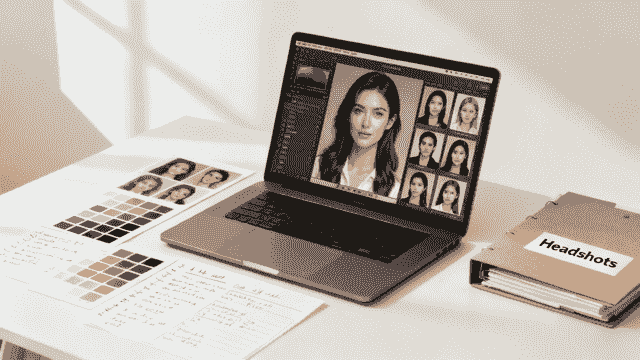
You'd think the project is over once the last photo is snapped, but that's a common misconception. The final steps—post-production and distribution—are where your investment really starts to work for you. This is the moment you turn great images into powerful, active brand assets.
Let's talk about retouching first. The modern approach is all about authenticity. Gone are the days of airbrushed, plastic-looking skin that scrubs away every last trace of personality. Today, the goal is simply natural enhancement. A skilled editor will remove temporary blemishes, like a stray hair or a stress pimple, while carefully preserving natural skin texture.
The aim is to make someone look like the best version of themselves on a really good day, not like a flawless robot. That delicate balance is critical for maintaining the trust and genuine connection you've worked so hard to build.
Building Your Final Deliverables Package
Once the editing is nailed down, you need to think about the final package of files. A one-size-fits-all approach just doesn't cut it anymore; a single image format won't look right on every platform. To make sure your modern corporate headshots are sharp and professional everywhere, your final delivery should include several versions of each approved photo.
Here’s what a comprehensive package looks like:
- High-Resolution Originals: These are your master files. They’re perfect for print materials, press kits, or any other large-format needs. You'll want them as uncompressed TIFFs or maximum-quality JPEGs.
- Web-Optimized Versions: These are smaller JPEGs, often around 1500-2500 pixels wide, that load quickly on your website’s "About Us" or team pages without sacrificing quality.
- Square Crops: Think social media. These are formatted specifically for profiles like LinkedIn, Instagram, and X (formerly Twitter). A 1:1 aspect ratio ensures the photo frames perfectly without any awkward, automatic cropping.
- Banner or Wide Crops: A 16:9 or similar wide-format version is incredibly useful for website hero banners, presentation slides, or speaker bios at conferences.
Having these different formats ready to go guarantees brand consistency and a polished presentation, no matter where your team members are being featured.
A well-planned rollout strategy prevents your new headshots from gathering digital dust. It ensures they are immediately and correctly put to use, maximizing their impact from day one.
Creating a Seamless Deployment Plan
With your polished assets in hand, the final piece of the puzzle is actually getting them out there. The biggest mistake I see companies make is just emailing the files out and hoping for the best. A structured rollout is essential if you want to maintain brand control and get everyone on board.
Your deployment strategy doesn't need to be complicated. Start by creating a centralized, easily accessible digital asset library. You can use a service like Google Drive, Dropbox, or a dedicated DAM (Digital Asset Management) system. This becomes the single source of truth for all approved headshots.
Next, create some simple but clear usage guidelines. This is just a short document that specifies which formats to use for which platforms (e.g., "Use the square crop for your LinkedIn profile"). It's also a great way to protect your brand consistency by stating that only the approved, retouched photos should be used professionally. This simple step stops employees from using old photos or cropping the new ones incorrectly.
Managing a large-scale update can be a lot to handle, so it's worth exploring efficient solutions for headshots for teams to make the whole process smoother.
Common questions about modern corporate headshots
When you're knee-deep in planning a corporate headshot project, a few key questions always seem to pop up. Getting them sorted out early saves a ton of headaches down the road and makes sure the final photos actually do their job. Here are the most common things people ask, along with some straight-up advice.
How Often Should a Company Update Its Headshots?
The sweet spot is every two to three years. This keeps your team’s photos looking fresh and current without making it feel like a constant, disruptive project.
Of course, life happens. You’ll want to schedule a new session sooner if someone has a major appearance change, your company goes through a big rebrand, or an employee gets promoted into a more visible leadership role. For companies growing like crazy, setting up an annual headshot day for new hires is a smart move to keep everything looking consistent from day one.
What Is the Biggest Mistake to Avoid?
Without a doubt, the biggest mistake is a lack of consistency. Nothing screams unprofessional like a company "About Us" page that's a chaotic collage of selfies, vacation photos, and professional shots from ten years ago. It instantly chips away at the credibility you’ve worked so hard to build.
The single most important thing you can do is create a clear style guide before a single photo is taken. Define the background, lighting, and overall vibe. This is the only way to ensure every image works together to tell a single, powerful brand story.
Can We Use Environmental Backgrounds?
Absolutely! In fact, using your office or another relevant setting is one of the best ways to get that modern, authentic look. These environmental headshots add context and personality that you just can't get from a plain studio backdrop. It's a subtle way to tell a story about your company culture.
The trick is to make sure the background adds to the photo without overpowering the person in it. Think of a tech company using its bright, clean office with the background softly blurred out. Or a construction firm using a project site to ground their team’s photos in the real work they do. It just works.
Should Employees Choose Their Own Photo?
Yes, and this is a bigger deal than you might think. The best way to handle it is to offer each person a small, curated selection of 2-3 professionally retouched photos to pick from. It's a simple step, but it gives them a sense of ownership and makes it far more likely they'll be happy with the final image.
When people genuinely like their headshot, they’ll actually want to use it on LinkedIn and other professional profiles. The key is that the company or the photographer curates the shortlist first, guaranteeing that every single option is on-brand and meets your quality standards.
Ready to create stunning, consistent, and modern corporate headshots for your entire team without the logistical nightmare of a photoshoot? BetterPic uses advanced AI to generate studio-quality, photorealistic images from simple selfies. Get your team’s professional headshots done in under an hour. Start your project today.
Sources & References
- LinkedIn Profile Photo Tips — LinkedIn
- How Your Profile Photo Impacts Your LinkedIn Presence — LinkedIn Official Blog
- AI Image Generation Market Report — Grand View Research
- How AI Is Changing Photography — Forbes
- Professional Headshot Photography Pricing — Thumbtack

Written by
Apoorv SharmaHead of Performance
Apoorv leads performance and growth at BetterPic with 9+ years of experience across SEO, SEM, and growth marketing. He oversees content strategy, data-driven marketing, and hands-on testing of AI headshot platforms. Previously held senior performance marketing roles across the US, Belgium, and India.
- Google Analytics & Google Ads certified
- HubSpot Inbound & Content Marketing certified
- 9+ years in SaaS growth and performance marketing
Related team and company headshots resources
Keep exploring this topic with focused resources from the B2B journey.
Primary destination:BetterPic Teams for company and employee headshots
Frequently Asked Questions
What makes a corporate headshot look modern?
- Modern corporate headshots use natural, relaxed posing with dynamic angles, soft dimensional lighting (often natural light), authentic expressions, and backgrounds that reflect company culture. They move away from stiff poses, flat studio lighting, and generic blue backdrops.
How often should a company update its team headshots?
- Every two to three years is the sweet spot. Update sooner if employees have major appearance changes, the company rebrands, or someone gets promoted to a more visible role. Setting up an annual headshot day for new hires keeps everything looking consistent.
How much is the corporate headshot photography market worth?
- The business headshot photography sector was valued at around $2.5 billion in 2023, with projections indicating it could grow to nearly $5.8 billion by the early 2030s. This growth is driven by companies' increasing need for consistent professional visual identities.
Should we hire a photographer or use AI for team headshots?
- A photographer excels for personalized, environmental portraits with human creative direction. AI is ideal for large, distributed, or remote teams that need speed, consistency, and cost savings. Many companies use a hybrid approach for the best balance of quality and efficiency.
What is the biggest mistake with corporate headshots?
- Inconsistency. A company page with a chaotic mix of selfies, vacation photos, and outdated professional shots screams disorganization. The fix is creating a clear style guide before a single photo is taken, defining background, lighting, wardrobe, and overall tone.
Save 87%on average on your professional photos.
Whenever, wherever you are.
Get studio-quality, 4K images in a variety of outfits & settings in less than an hour.
Get your headshots nowStart now